Wednesday, December 31, 2003

The Library; with whining, the web, a would-be user, a wish, and some wandering

The library closed early today - just as I got there in fact, at 5pm. Why is it necessary to close one hour early on New Years Eve? You're not going to miss the Blessed Event if it closes at the normal 6pm, that leaves you six hours, you could practically drive to LA by then... yes, this is whining. Apologies.

More complainingfeedback, re website usability (or patron blindness): went to the site, which is crammed with links; the "locations and hours" didn't show anything special, the "holiday hours" did exist but was off to the right and did not attract attention...and the page took 19 seconds to load with a dial-up line at 45k. This being a largely rural county, many (most?) users do have dial-up (i.e. slow) access.

Perhaps the library could get itself a simple, informal weblog? where the natural thing to post on, if you're closing early, is that you're closing early? It's a good way to make very clear what's new news and what information is more static.

So I visited some library-themed weblogs to get/give an idea of the possibilities.

Sample library weblogs:
And there's a plethora of librarians' weblogs out there. Most prominent is the Shifted Librarian; Ex Libris has a page of Quotes, among them these:
From Teresa Nielsen Hayden:
What’s in old libraries*? You don’t know until you find it. But in order for that to happen, you have to preserve the old holdings and original documents...
* occasionally, old smallpox scabs

From Carol Megathlin:
The quality and self-respect of a people can be gauged -- not exclusively, but succinctly -- in their libraries. The open door of a library says we are ignorant without excuse. The boarded-up door says we are simply ignorant.
Also these pearls:

The Expert User Is Dead (via) :
We should design our websites, out databases, our webguides, our instruction, our reference interviews for who our users are, not who we would like them to be.
...
We don't read pages, we scan them. We don't make optimal choices, we satisfice. We don't figure out how things work, we muddle through."

When users come to a library page, or to one of our database pages, they don't suddenly shed these characteristics...
Update: here's a news article on
librarian blogs


Finally, some legal advice on making agreements with Sauron.

Polite fiction

I would attempt to write something worthwhile rather than just doing the copy-paste thing but it's too late, it's tomorrow already. So -

Ali, via Hunting the Muse:
One of my favorite concepts in anthropology is that of the polite fiction. It's something nobody believes, but we all pretend to because it makes life so much easier. My favorite example was of a Pygmy couple. Pygmy divorce involves quite literally breaking up the home: the couple tears apart their house (it's easy - the houses are made of leaves) and once it's down, the union is dissolved. One anthropologist was watching a long-married couple have a fight. It escalated until the wife threatened to leave, and the husband yelled something along the lines of "Fine!" and there was nothing the wife could do but start tearing down the house. She began tearing the roof off, clearly miserable. The husband looked wretched too, but at this point neither could back down without losing face and by now the whole village was watching.
Finally, the husband called out the Pygmy equivalent of "You're right, honey! The roof is dirty! It'll look much better once we get those leaves washed!" The two of them started carrying leaves down to the river, soon with the help of the whole village, and then washed and rebuilt the whole roof. When the anthropologist later discreetly asked how often one washes the roof, everyone looked at him like he was a complete doofus.

Monday, December 29, 2003

'Tis the season to be chilly

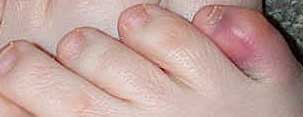
There's snow on the ground, and I would have walked over and gotten a photo of snow on the town, but a) the broken toe doesn't enjoy travel and b) the Nevada City Live webcam will (in daytime) show you just as well. (FYI: as of this writing, you can't view the webcam if your browser security is set to High.)

The technical term for what I've heard called "popcorn snow" is graupel: "an unstable air mass produced unusual icy pellets that looked like snow. The frozen pellets, which resemble hail, are called graupel...what looked like frozen white peas coated backyards..."

As discovered last spring: to keep warm if you don't want to enrich (or un-bankrupt) PG&E, cut off the leg from an old pair of jeans, sew one end shut, pour about 5 pounds of pre-baked (to reduce moisture) dried rice in the other end, knot or tie firmly. Heat in microwave. It works as well as a hot water bottle and those pesky leaks are considerably less disturbing.

Updated with tips:
  • from Sally - if your car door lock is frozen, heat your key? the lock? with a cigarette lighter.
  • Keep frost off your windshield by putting your sunshade on the _outside_. Or, better yet, park under an evergreen.

Saturday, December 20, 2003

Friday, December 19, 2003

women's night

Virginia Woolf, visionary: from Reid Robinson's Dec. 15 letter in the Toronto Globe and Mail (via Marcelo Vieta, via netwoman):
In a...prescient comment in a letter to Lady Robert Cecil in 1909, Virginia Woolf...writes: "There should be threads floating in the air, which would merely have to be taken hold of in order to talk. You would walk about the world like a spider in the middle of a web. In 100 years time, I daresay these psychical people will have made all this apparent, now seen only by the eye of genius."
Wish I could write like Shelley, aka Burningbird. Start of her latest:
Out on errands tonight I noticed how few lights there were about this year, how few homes seem decorated for the Christmas season. Last year at this time, you could easily know you were in the midst of a town that celebrated Christmas seriously. This year, most of the homes seem dark and shuttered...
Sheila Lennon's
Subterranean Homepage News has a wealth of great links:
  • Margaret Wheatley:
    I've begun to invite the people I meet into conversation by asking: "What is it that you love about America? What things must be protected at all costs?" This question leads to wonderful explorations. People are energized to talk about what they love, what it means to live here as an immigrant, what they've learned about freedom, imagination, the human spirit, creativity, democracy. Even if these ideals are receding from our day-to-day experience, we realize how important it is to claim them as our own...
  • from an article in Wired, this:
    University of Maine's Still Water new media lab has produced the Pool, a collaborative online environment for creating and sharing images, music, videos, programming code and texts.

    "We are training revolutionaries -- not by indoctrinating them with dogma but by exposing them to a process in which sharing culture rather than hoarding it is the norm," said Joline Blais, a professor of new media...
  • on electability:
    [ American culture today] equates violence with strength and power with potency. It is a rogue thing that does not honor the principles of civilization or the processes of governance.
    ...following the rules is for girls and sissies...
    But this is looking at manhood from a child's perspective. Adults realize why there are rules, and honor them. A child just understands power -- you have to be fair only because adults say so. And if you're strong enough and it's your ball, you can make up the rules...

Wednesday, December 17, 2003

land of the free

ChoicePoint is Big Brother's little helper, bringing literature to life...
Even when he is alone he can never be sure that he is alone. Wherever he may be, asleep or awake, working or resting, in his bath or in bed, he can be inspected without warning and without knowing that he is being inspected. ... Not only any actual misdemeanor, but any eccentricity, however small, any change of habits, any nervous mannerism that could possibly be the symptom of an inner struggle, is certain to be detected. He has no freedom of choice in any direction whatever.
Excerpt from a discussion over at CalPundit on the potential for fraud in electronic voting:
...as a general rule, as the world's alleged leading democracy one would think we would institute the most tamper-resistant technology possible, not the most easily tampered with...

"no piece of technology is perfect and a paper trail is a good idea in case of software failure or a simple need to do a recount."

Don't worry about it Kevin - if anything needs to fixed in this country, someone else will fix it - we don't have to worry.
update: thank God for Wired's reporting on the e-voting dangers. The latest is this:
At least five convicted felons secured management positions at a manufacturer of electronic voting machines...[including] a cocaine trafficker, a man who conducted fraudulent stock transactions and a programmer jailed for falsifying computer records.

According to a public court document released before GES hired him, [the programmer] served time in a Washington state correctional facility for stealing money and tampering with computer files in a scheme that "involved a high degree of sophistication and planning."
Delivered into Hell, courtesy of the United States

from Metafilter:
Government is not reason, it is not eloquence, it is a force. Like fire, it is a dangerous servant and a fearful master; never for a moment should it be left to irresponsible action.
- George Washington, terrorist/freedom fighter
In Newsweek, A Net of Control:
Picture, if you will, an information infrastructure that encourages censorship, surveillance and suppression of the creative impulse. Where anonymity is outlawed and every penny spent is accounted for.
Where the powers that be can smother subversive (or economically competitive) ideas in the cradle, and no one can publish even a laundry list without the imprimatur of Big Brother. Some prognosticators are saying that such a construct is nearly inevitable. And this infrastructure is none other than the former paradise of rebels and free-speechers: the Internet.


Old, often posted, increasingly relevant, They thought they were free, on life in 1930s Germany:
What happened here was the gradual habituation of the people, little by little, to being governed by surprise; to receiving decisions deliberated in secret; to believing that the situation was so complicated that the government had to act on information which the people could not understand, or so dangerous that, even if he people could understand it, it could not be released because of national security...

Tuesday, December 16, 2003

process improvement for the political weblog ecosystem

Philosoraptor wields the nailgun once again (update: inexplicably failed to also credit a fine post on this subject by the lovely and talented Amygdala) in questioning the enormous investment of time and energy that goes into writing political weblogs which then have minimal impact, due to their inherent tropisms toward preaching to the choir and toward demolishing the most idiotic of the opposition's writings:
I want to make it clear that I don't think that everyone I disagree with is stupid or dishonest, though I'm often prompted to respond to the worst stuff I run across, and that stuff is often written by people who do, in fact, have one of the two defects in question. Maybe that's my problem. Perhaps I need to start responding to more sensible people.]

I think that is the point. Weblog culture needs to change in order for it to succeed at more than oral froth generation - there's a crying need for integrated group weblogs with unlike-minded authors who are willing to address and acknowledge each others' strongest points rather than remaining silent on them, to discuss issues in a respectful fashion rather than alienating and demonising, to commit to engage in honest enquiry rather than point scoring, to look for common ground rather than just differences.

Put the Crooked Timbers and the Volokhs together, illuminate with the Light of Reason, sit back and watch the synergy...

Extend the Blogging Loosely Applied Practices credo to include commitments to discussing in good faith, to not repeating demonstrably false "facts", to acknowledging when your opinion or judgement on an issue has changed. Find - and use - a new term for "playing fair" that discards the "competition" connotation. And make it a badge of honor to adhere to these practices.

Monday, December 15, 2003

Rhetorical sampler

There's a lot of good information over on Rhetorica:
  • In here, in the section "Bias in the news media", enumeration and description of the structural biases of journalism:
    • commercial
    • temporal
    • visual
    • bad news
    • narrative
    • status quo
    • fairness
    • expediency

  • In Pass the propaganda, the various ways that a speech can be used to convey a point without ever coming out and making the point explicitly:
    Literalists will argue that [X] never said in so many words yadda yadda yadda. This willfully misunderstands rhetoric. [X] didn't have to say it in so many words. The pathos and enthymemes of the speech did the persuading. Aristotle, 2,300 years ago, demonstrated how to get an audience to complete an argument by adding in the stuff that isn't specifically said.

    Journalists could report persuasive tactics as verifiable events if they knew how. Instead, they rely on partisan pundits to tell them what it all means. And the result is their reporting does more to transmit propaganda than to interrupt or challenge it.
  • Analyzing Argument:
    The problem with Aristotle's logic (concerning his desire for logic) is that argument by the syllogism is often deadly dull. Humans are passionate creatures whose hearts and minds are moved with appeals to emotion (pathos), character (ethos), as well as logic (logos)...

never underestimate the power of the press


and recycle frequently.

Sunday, December 14, 2003

the current event

Excellent news from Iraq. here's hoping it deflates the bubble of violence and the rebuilding can get on track.

interesting though - I got the news by way of a right-wing weblog, in which the writer's second (after "hooray, we got Saddam") was along the lines of "all those lefties are going to be very disappointed when they find this out". HUH?

and elsewhere, on a more left-leaning blog, the author was saying "now I hope all the lefties will remember that this is a good thing for our country". HUH?

Another good thing for this country would be if we could get a little better at distinguishing myth from reality - and from what I've seen, the Saddamite lefties lie in the first category.

It's easy to fall into seeing - and demonizing - others from the "you're either with us or against us" perspective, but people do come in more flavors than "ally" and "enemy".

update: unfortunately, the disappointeds are not as mythical as I had thought. Not common, though.

update II: the Philosoraptor nails it again.

update III: in The 'Republic of Fear' Is Dead:
In his wrenching book on Saddam Hussein's Iraq, the dissident writer Kanan Makiya explained that the most powerful force keeping the cruel regime in power--more important than brute strength--was "an all-embracing atmosphere of fear"...
i.e., civil civic discourse was not high on his list of priorities.

cries for help (not)

via Orcinus, fascinating article published last year in the Billings [Montana] Outpost
The "School Yard Bullies" report, compiled by network co-directors Ken Toole and Christine Kaufmann and other staff members, details more than 40 recent incidents of near-violence, threats, vandalism and degradation aimed at individuals and organizations involved in environmental causes in northwestern Montana.

"The purpose of the report is to inform the community and give people information they need to speak out against intimidation and reclaim civility in the public debate," Ms. Kaufmann says.
Similar tactics detailed in The war against the greens (book) by David Helvarg (here's an interview, with some pretty disturbing details)

Friday, December 12, 2003

local cribbing

in case any local types aren't reading The Union and therefore missed this (yeah, i know, fat chance that you'd be here, if you're both a) local and b) not a Union reader...) -
Anatomy of The Union's letter-writers - "The Analyst...the comedian...the bewildered...the bomb-thrower..."
it's pretty good. especially this, which seems far stronger than anything The Union has dared to publish in the past:
We try to screen out the personal attacks and the bloodthirsty language - not to "censor," as some of them charge, but because that's not the kind of opinion page we want in The Union. If you allow too much of that behavior, then the page becomes a freak show instead of a community forum.

However, a freak show is what some readers would like to see. One writer said he gets pumped up when, walking down the street after writing a particularly vicious broadside, his friends high-five him for enraging his political or social enemies.

Unfortunately, sometimes this angry behavior doesn't stop with letters. I was dismayed to hear from a person who had written a well-reasoned letter to the editor about a local issue, then received a threatening, anonymous note in the mail.

Fear of things like this undoubtedly keeps many from writing letters or Other Voices guest columns...

Also Anger Management:

...it set me to thinking about the nature of the angry personality - what fosters it, and what outlets it uses.
...
The recent story we told about one Grass Valley editor caning another back in the 1860s led me to another theory: that the origin of anger here goes back to the independent, "I want mine" nature of those 49ers who stampeded to the gold fields.
and, once they got there, set to work driving off and killing the indigenous residents...

local blogs unearthed, and a thought

Turns out the Bill of Rights Defense Committee has a blog, as do (did? they're stale) Jim Weir (our former Supe, who ran a valiant campaign for Calif. governor against Arnold Schwarzenegger this past fall) and his wife Gail.

Here's the thought- very rough -

The press in all its forms, be it newspaper or weblog or radio or TV, should encourage fairness, freedom of speech, and the airing of a diversity of viewpoints.

And in a civilized society, in order to help the reader to best see the truth, they should encourage those with opposing views to discuss the issues in a civil manner, with no threats, namecalling, or other smearing.

But what do you do when these goals conflict? When a particular political viewpoint is classically held by a personality type that _doesn't_ easily toe the straight-and-rational, that gets hot under the collar, someone who's inherently more a fighter than a thinker? For example, Roger Ebert said this:
There's an interesting pattern going on. When I write a political column for the Chicago Sun-Times, when [X]s disagree with me, they send in long, logical e-mails explaining all my errors. I hardly ever get well-reasoned articles from the [Ys]. People just tell me to shut up. That's the message: "Shut up. Don't write anymore about this. Who do you think you are?"
In browsing the blogosphere you become struck by how there's a distinct confrontational tone that some weblogs, and presumably their authors, have, that _is_ correlated with a political view - there's a joy in putting down other people, a rejoicing in the incredible, pathetic foolishness of The Other, to the extent that - well, you get the feeling that they'd miss it, if they couldn't experience it. Then there's another class of blogs whose authors seem equally oppositional but don't seem to have a good time with it at all, it's more like they're enslaved by their anger.

So, is it fair to insist that, when these classes of people wish to participate in a forum that's in neutral territory, they must constrain their behavior in ways that are unnatural to them? In a way it's like requiring a literacy test for voter registration, or making them express themselves in a foreign language.

on the other hand, the alternative is to allow the street fighters into the drawing-room(1), with predictable results.


[added Oct 04]
1: Joshua Micah Marshall:
...the niceties of conflict resolution are hardly appropriate or sensible if you're trapped in a dark alley with a couple mafia goons

more doc on the future of radio

here:
...At some point we need to face the facts. AM and FM broadcasting suck down huge amounts of electricity. Their towers bristle from swamps and mountaintops. And their technologies were developed before the middle of the last century. They use old brute-force technology to deliver what can be done far more efficiently by more "cellular" means. The low number of channels, and high costs of occupying them, makes the industry available to a few grandfathered incumbents. Why shouldn't there be an unlimited number of stations, just like there are an unlimited number of Web sites, of blogs, or or any breed of source on the Net? No reason at all. Unlimited opportunity will truly let the market decide what it can support.

Thursday, December 11, 2003

disruptive technology will make waves in radio

Doc Searls lately with a couple of pieces. First, How radio can unsuck itself:
Old Fashioned Broadcasting - AM, FM, TV, Shortwave... - is railroads. Internet Radio, by individuals and small organizations, is cars. We still have railroads, of course. But what cars did was give us a way to make our own transportation. To go where we wanted to go, in our own way, thank you very much. The same thing will happen, has to happen, to radio.
then Rant Radio:
...the big difference between Rant Radio and Ranting Bloggers is that I can't avoid the former and I can the latter.

On the road yesterday I wanted some traffic and weather. Fine, but scanning the dial, I had to put up with a load of ranting to find what I wanted. I had to listen to choose, weed through to find. Radio has no index. No search by content.

On the web, I put what I want in a search and I get the info. I may have to scan a Google list but I don't have to read the content of each. Yes, I set my "favorites" like my dial, but no one is controlling the content or limiting the choices...


and - in keeping with yesterday's post below- discovered a fine film review writer, Jeannette Catsoulis, here on LOTR. If your film is a dog, you do not want her reviewing it.